To further implement the core mission of moral education and character building in aesthetic educa…
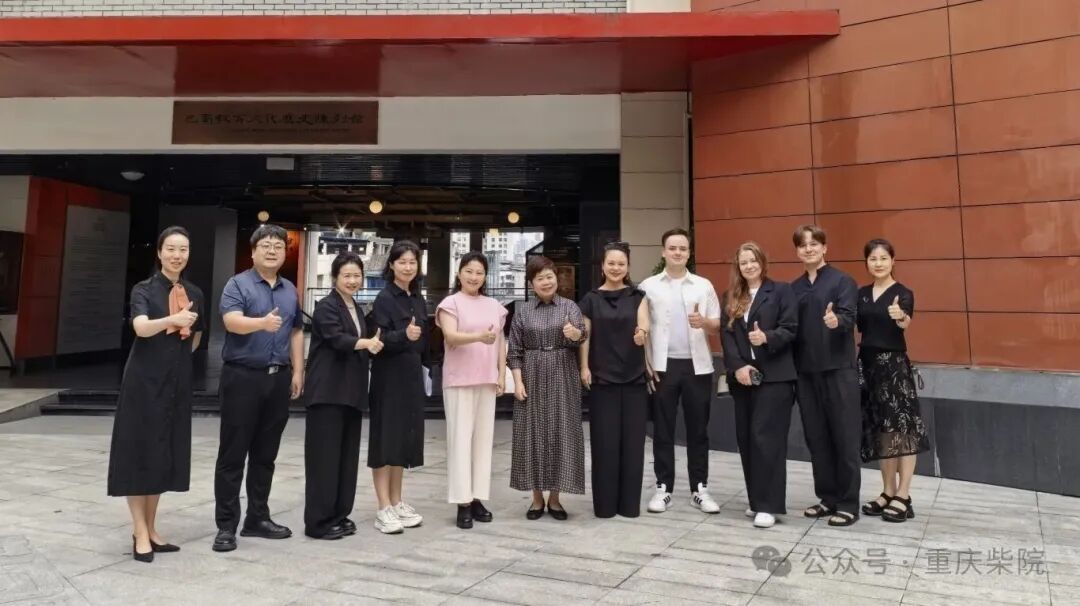
To further implement the core mission of moral education and character building in aesthetic education in the new era, break down the barriers between higher art education and basic education in aesthetic education, and explore a new model of artistic interconnection and collaborative education across universities, secondary, and primary schools, on the afternoon of June 24, 2026, a delegation led by Gao Jingli, Party Secretary of the School of Music of Chongqing Normal University, including Vice Dean Wu Jingyu, Luo Rui, Deputy Director of the Party and Administrative Office, and Russian foreign teachers of the Chongqing Tchaikovsky Music School of Chongqing Normal University (hereinafter referred to as the "Chongqing Tchaikovsky Music School") — Anna Makrekhina, Sergei Irinev, and Dmitri Potapov — visited Chongqing Bashu Primary School to carry out aesthetic education research and exchange. Ma Hong, General Principal and Party Secretary of the Bashu Primary School Group, Pan Nan, Principal of Bashu Primary School, Chen Yi, Vice Principal, and Chen Yadan, head of the Art Teaching and Research Section, gave the delegation a warm reception.
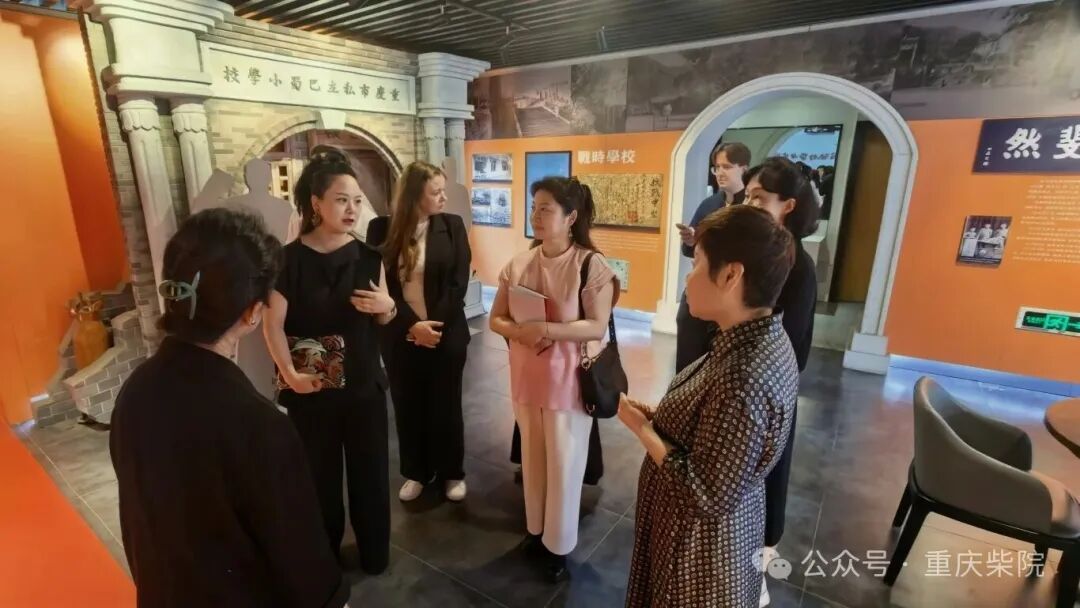
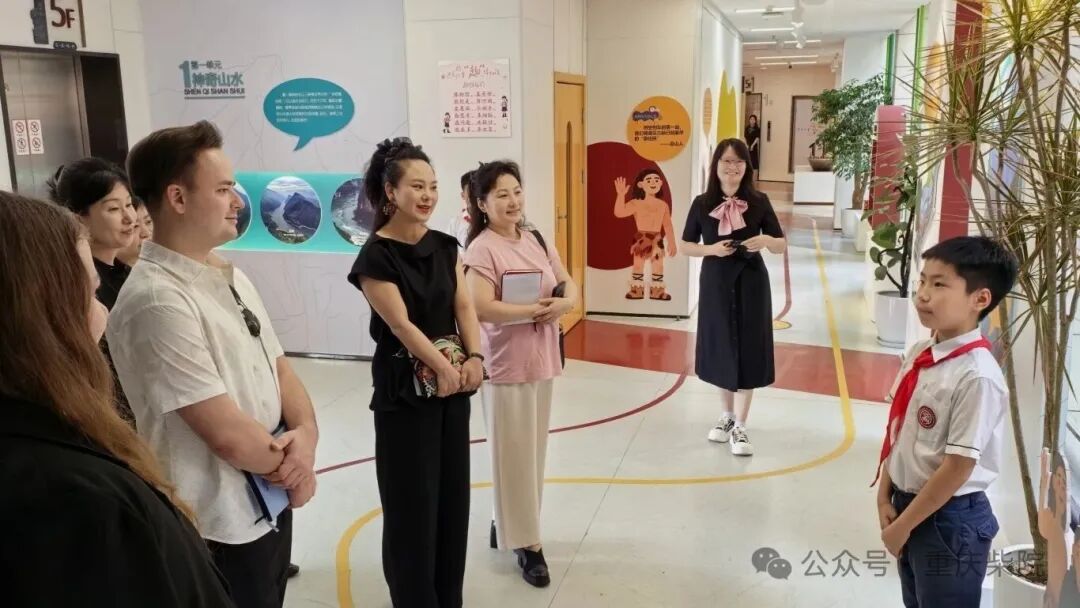
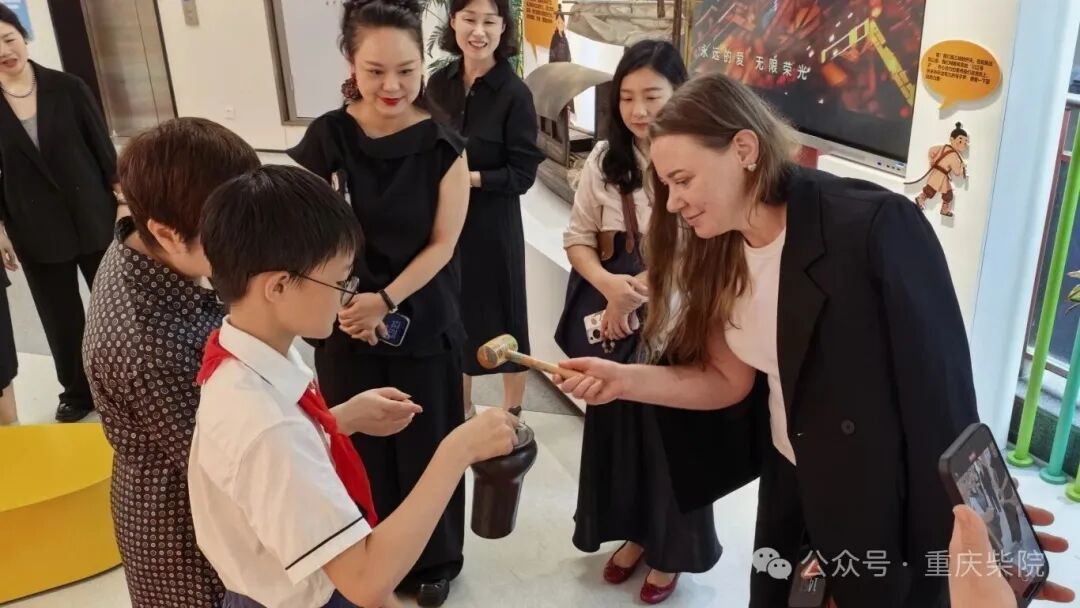
At 14:30 in the afternoon, the research team arrived at Bashu Primary School. Accompanied by the school, the team visited the school history museum and the "Fun Museum" in turn. Through the school history museum they gained an in-depth understanding of the school's educational heritage, and at the "Fun Museum" they directly experienced the students' confident demeanor in curating and explaining exhibitions on their own, witnessing the educational philosophy of "learning through play, gaining insight through fun, and creating through joy" being brought to life. Team members were full of praise for the comprehensive qualities displayed by Bashu students, saying that this was a visit full of warmth and vitality.
In addition, the children enthusiastically introduced distinctive musical instruments to the Russian foreign teachers, inviting them to guess and try playing them on the spot. The Russian teachers accurately guessed the names of the instruments and actively joined in the interaction; the atmosphere was warm and harmonious, as art crossed the boundaries of language to become a bridge connecting hearts.
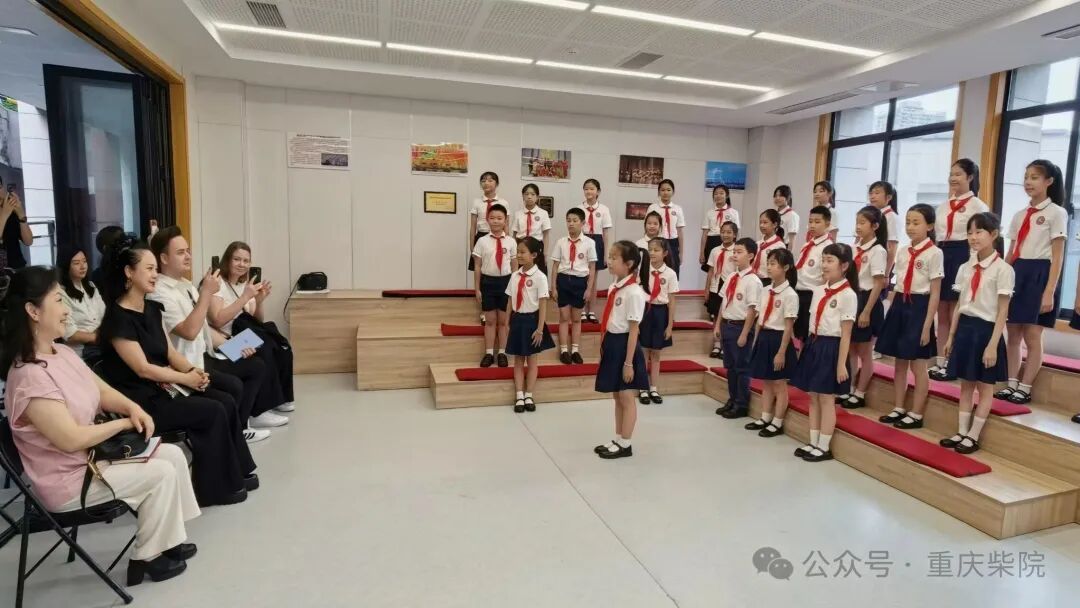
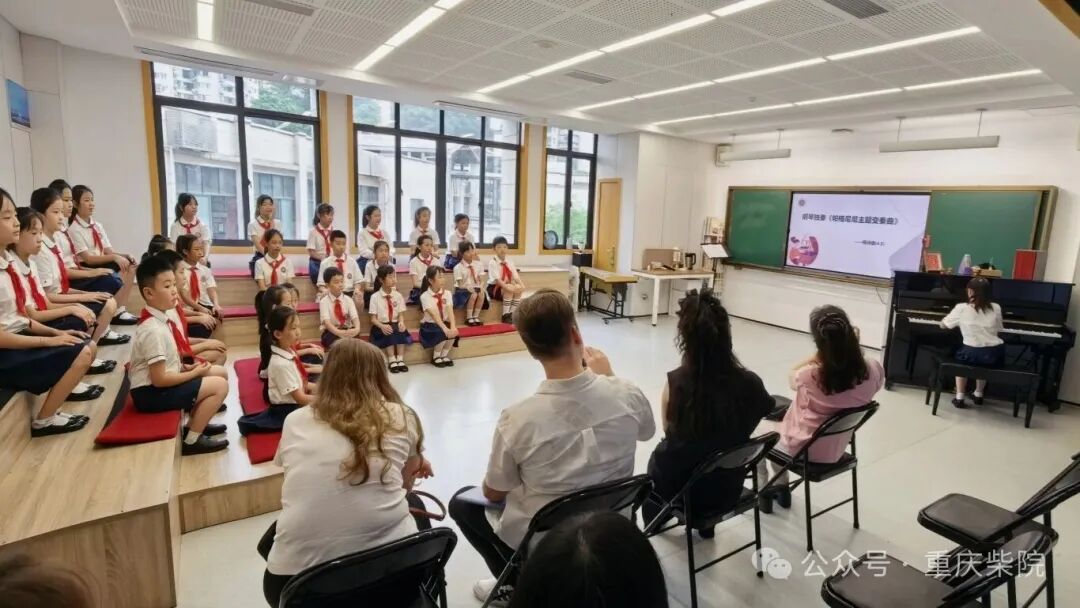
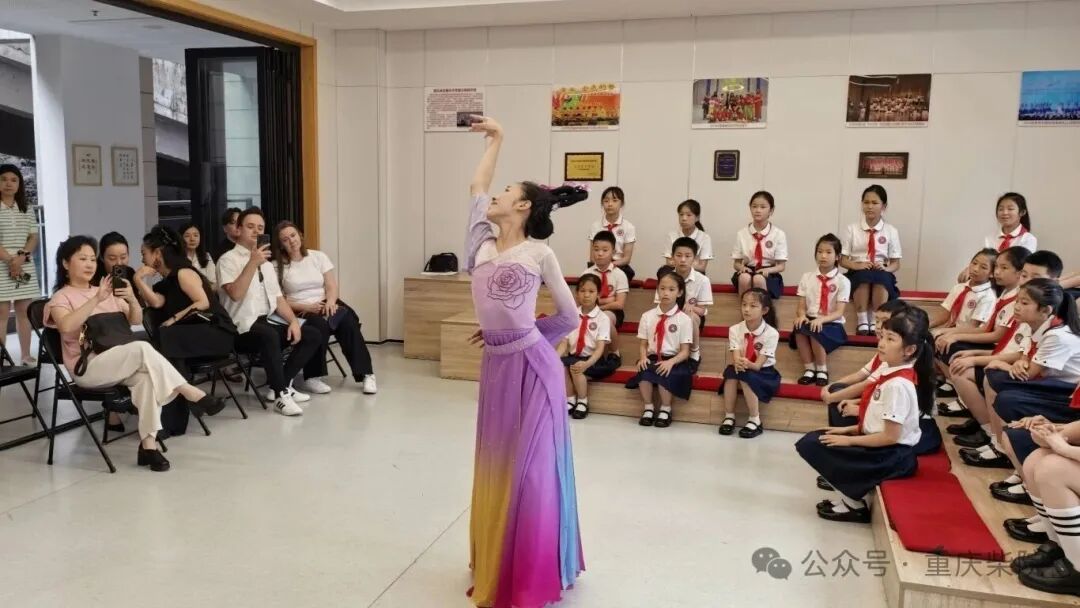
Afterwards, the research team went to the choir room and observed a unique student art showcase. In just 20 minutes, the performance fully demonstrated the solid artistic literacy and vibrant creativity of Bashu students.
The Dream Choir took the stage first, performing the choral piece "Gratitude" with deep feeling, its clear children's voices moving the entire audience. Then Cheng Shihan from Class 5, Grade 4, gave a piano solo, "Variations on a Theme of Paganini," winning rounds of applause with her skilled technique. Pu Dandi from Class 3, Grade 6, presented a solo dance, "Ayi Guli," her graceful movements enchanting the audience.
It is worth mentioning that Cheng Shihan, who had earlier given the piano performance, after the showcase ended, confidently and naturally took the initiative to communicate in English with the Russian foreign teachers and the visiting team, displaying the confident, open-minded, and elegant spirit of Bashu students.
During the symposium, Gao Jingli, Party Secretary of the School of Music of Chongqing Normal University, and her delegation heard an introduction from Bashu Primary School on its aesthetic education practices. The school upholds the core of "rhythmic education" — "moving for students, beautiful for rhythm, beauty shared by all" — regularly carrying out art activities with a 100% participation rate among teachers and students; its branded art troupe, established 92 years ago, has repeatedly won national and municipal awards and has been invited to exchange visits in many countries. Party Secretary Gao Jingli highly praised Bashu Primary School as a municipal model of aesthetic education, and introduced that the Chongqing Tchaikovsky Music School, drawing on the 160-year educational strengths of the Moscow State Tchaikovsky Conservatory, will undertake the functions of internationalized talent cultivation, regional aesthetic education outreach, and cultural exchange between China and abroad. She proposed that in the future the two schools can deepen normalized "big hands holding small hands" cooperation in three aspects: first, co-building the teaching staff through two-way study visits; second, co-cultivating student clubs to empower growth; third, sharing platforms to achieve beauty shared by all, so that Bashu students can stand on a higher and broader international stage to tell the story of Chinese youth.
A journey of exchange gathers strength for aesthetic education; a two-way endeavor nurtures the blooming of flowers together. This research and exchange is both a concentrated display of the achievements of basic education aesthetic education at Bashu Primary School and a pragmatic connection through which high-quality aesthetic education resources of a university reach down to empower basic education. In the next step, the Chongqing Tchaikovsky Music School and Chongqing Bashu Primary School will take this event as a starting point to deepen the "big hands holding small hands" aesthetic education co-construction model, implement a series of cooperation projects including teacher study visits, club cultivation, platform sharing, and co-creation of courses, break down the barriers between aesthetic education stages across universities, secondary, and primary schools, integrate Chinese and foreign aesthetic education resources, cultivate aesthetic education rooted in Bayu culture, jointly polish Chongqing's regional aesthetic education calling card, nurture children's hearts through aesthetic education, promote quality improvement through collaboration, and join hands to build a new future of collaborative aesthetic education in the new era.

Chongqing Normal UniversityChongqing Tchaikovsky Music School
Writer: Su ZhimeiLayout and Design: Su Zhimei
First Review and First Proofreading: Xu Xiaojing
Second Review and Second Proofreading: Luo Rui
Third Review and Third Proofreading: Wu Jingyu
Responsible Editor: Gao Jingli