This concert was hosted by Chongqing Normal University, jointly organized by the Tchaikovsky Conse…
This concert was hosted by Chongqing Normal University, jointly organized by the Tchaikovsky Conservatory of Music at Chongqing Normal University (in preparation), the Office of Research Administration, and the International Cooperation Office. It featured a professional performance ensemble composed of the Conservatory's preparatory faculty and industry guests, hosted by Wu Jingyu, Vice Dean of the School of Music at CQNU, and Anna, teacher of the Conservatory's preparatory program.
The program spanned Chinese and Western classics—from the refined poetry of Chinese art songs to the profound heritage of Western classical music—with every work performed to the fullest:
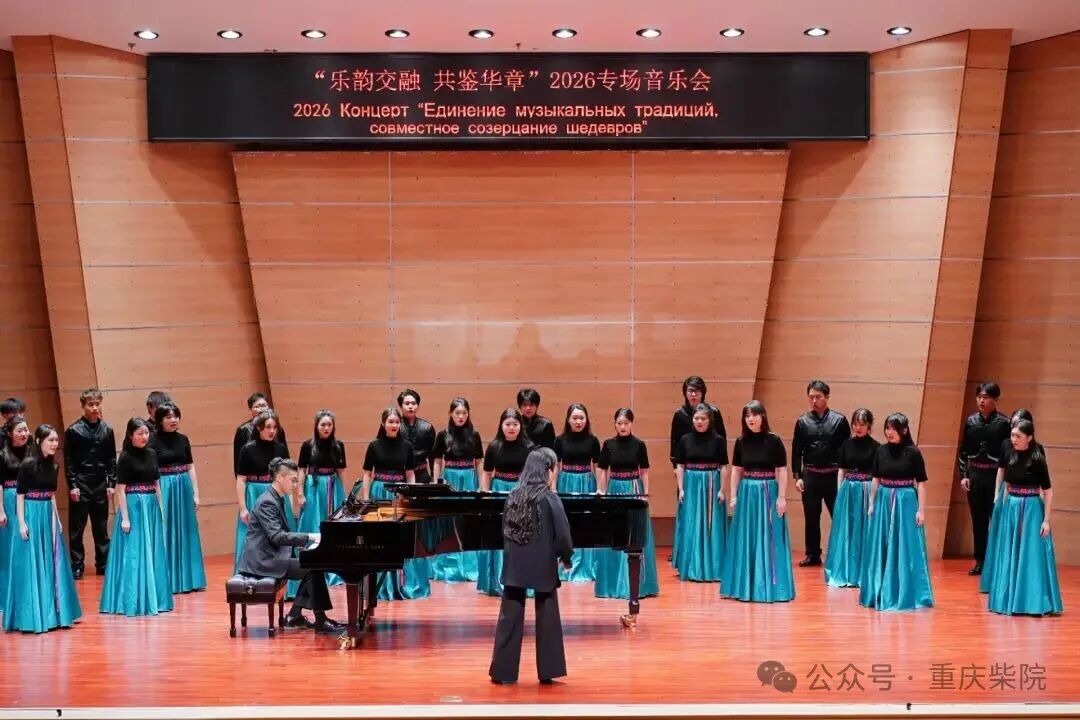
The CQNU Silk Road Choir opened with Hi! Hello, Youth and Strike the Drum (from the Book of Songs, "Bei Feng"). Youth is a theme of never-fading ardor, while devotion to home and country and the sentiments of a thousand ages are civilization's eternal footnotes. When youthful, exuberant melody collided with ancient, contemplative poetry, the clear, lilting voices conveyed a cultural resonance spanning a millennium—igniting the atmosphere from the very start.
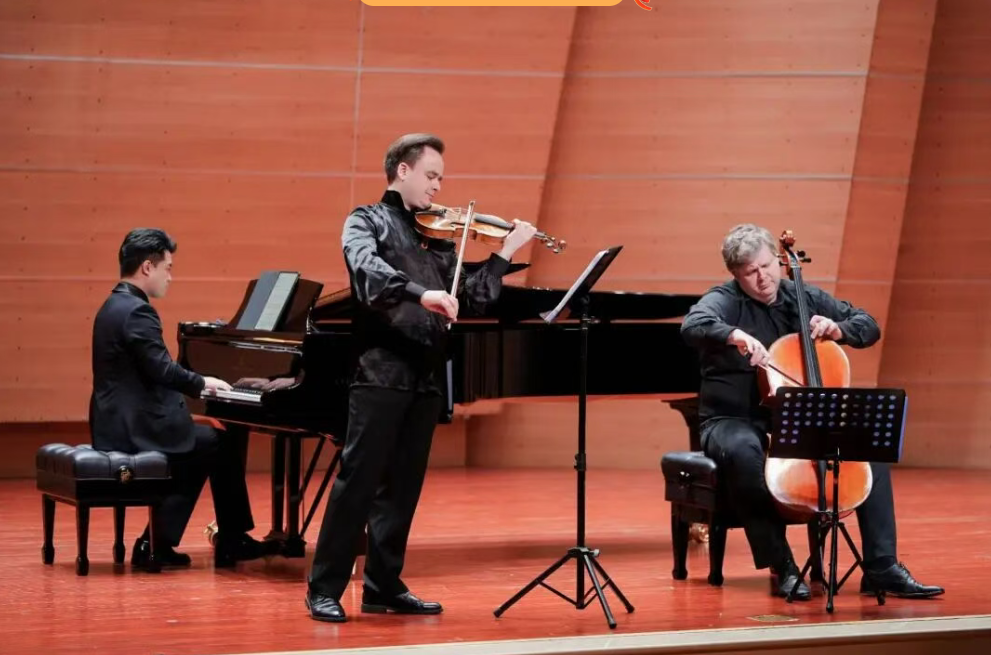
Sergey Irinyov, violin teacher of the Conservatory's preparatory program, Doctor of Russian Arts and first-prize laureate of international competitions; Fedor Amosov, cello teacher of the preparatory program, Candidate of Russian Musical Performance Arts, cellist, composer, and conductor; together with Jiang Sixing, a Russian-trained Doctor of Piano, performed Shostakovich's Waltz No. 2. Composed in 1938 as a classic movement of the Second Jazz Suite, the work carried a distinctive artistic flavor under its unusual title in a singular era. That evening, the nimble violin, the mellow cello, and the flowing piano intertwined, displaying the unique charm of Soviet-era classical music to the fullest—the audience below listened breathless, fully immersed.
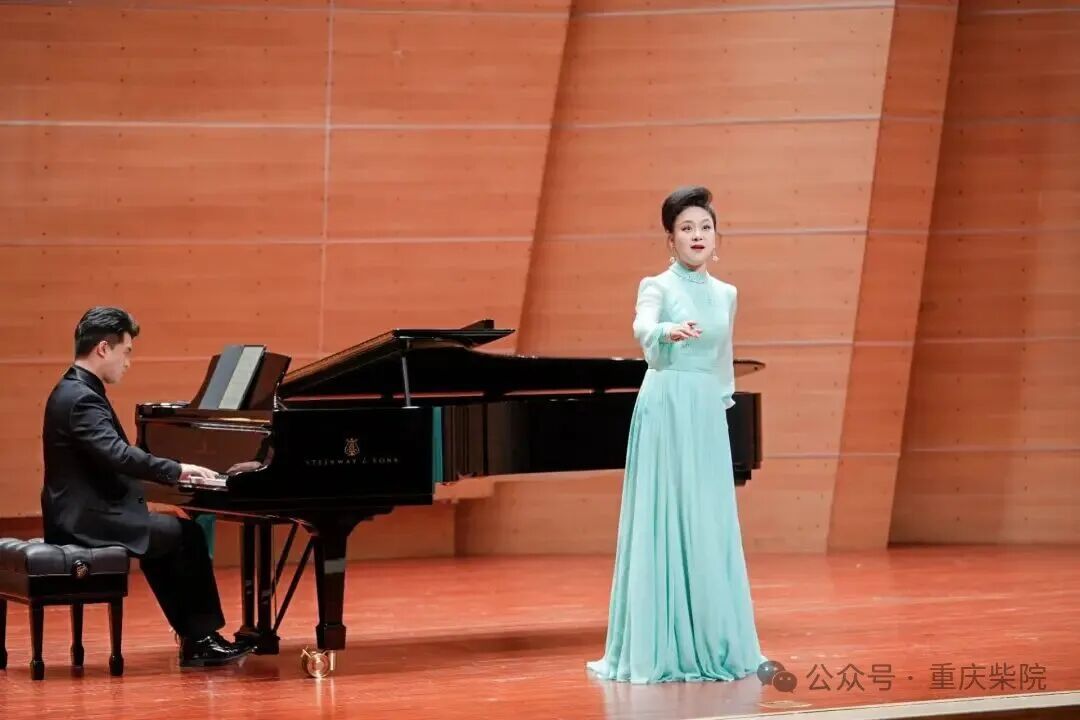
Wu Jingyu, Professor and Vice Dean of the School of Music at CQNU and young lyric soprano, sang Hearing a Flute on a Spring Night in Luoyang and Quiet Night Thoughts. These two works come from precious manuscripts composed 101 years ago by the Soviet composer Aaron Avshalomov on classical Chinese poetry, unearthed and compiled by CQNU's Wu Jingyu research team on Sino-Soviet musical culture. Her clear, graceful voice, paired with delicate emotional expression, let the moonlight and flute of Li Bai's verse flow slowly through the melody across a thousand years—the lingering tones left the audience entranced.
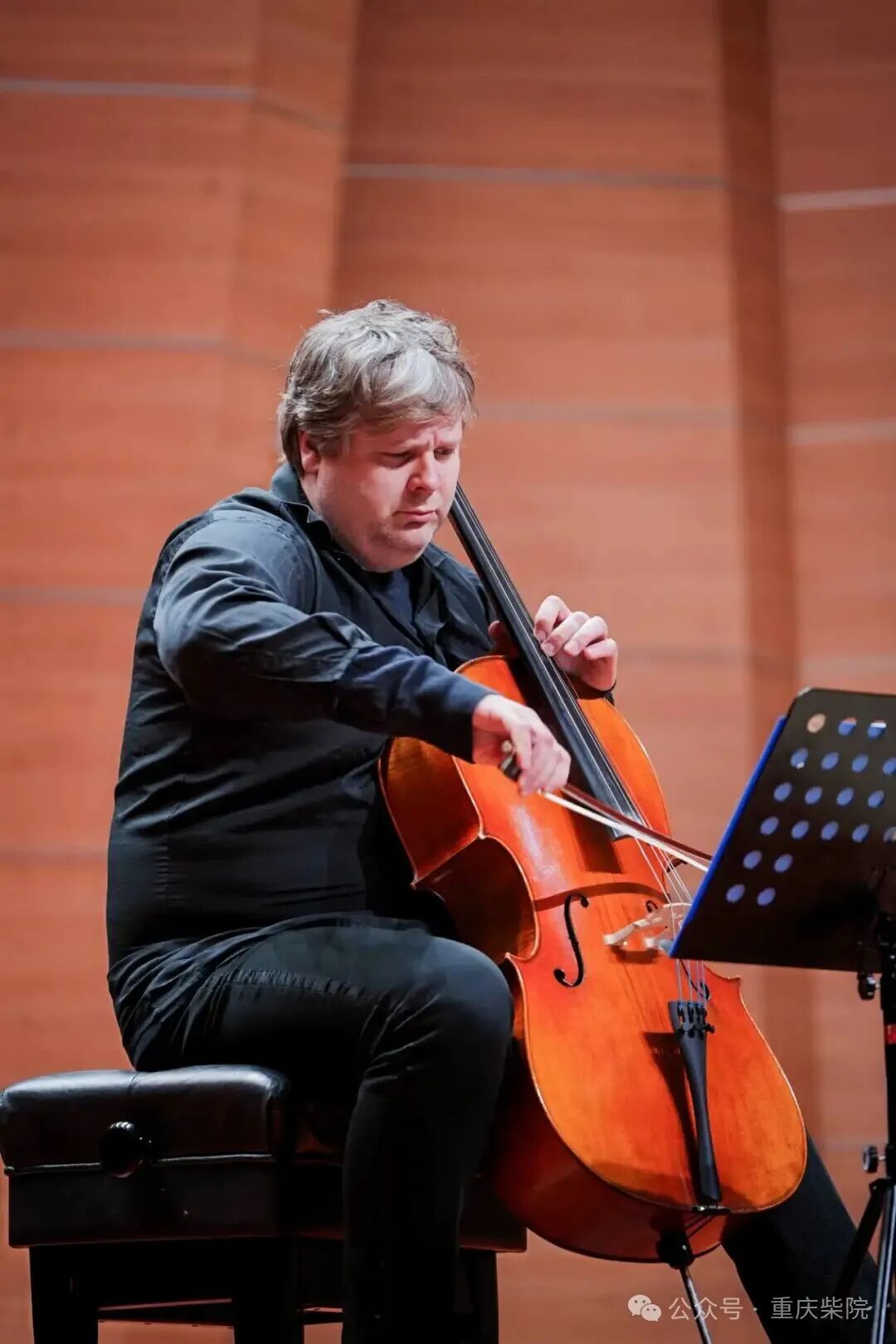
Cellist Fedor Amosov performed Bach's Suite No. 1 for Unaccompanied Cello—with a single cello and four strings, he built a rich and profound musical universe; his deep, restrained interpretation, informed by diverse artistic perspectives, was layered and deeply moving. Professor Vasily Shcherbakov of the Moscow State Tchaikovsky Conservatory performed Chopin's Prelude in D-flat major, the right hand's rolling figures like rain beneath the eaves, the left hand's melody like a whisper from the heart—his romantic, delicate touch struck straight to the soul. With profound mastery, the two performers gave voice to the timeless allure of classical music; every note struck the spirit.
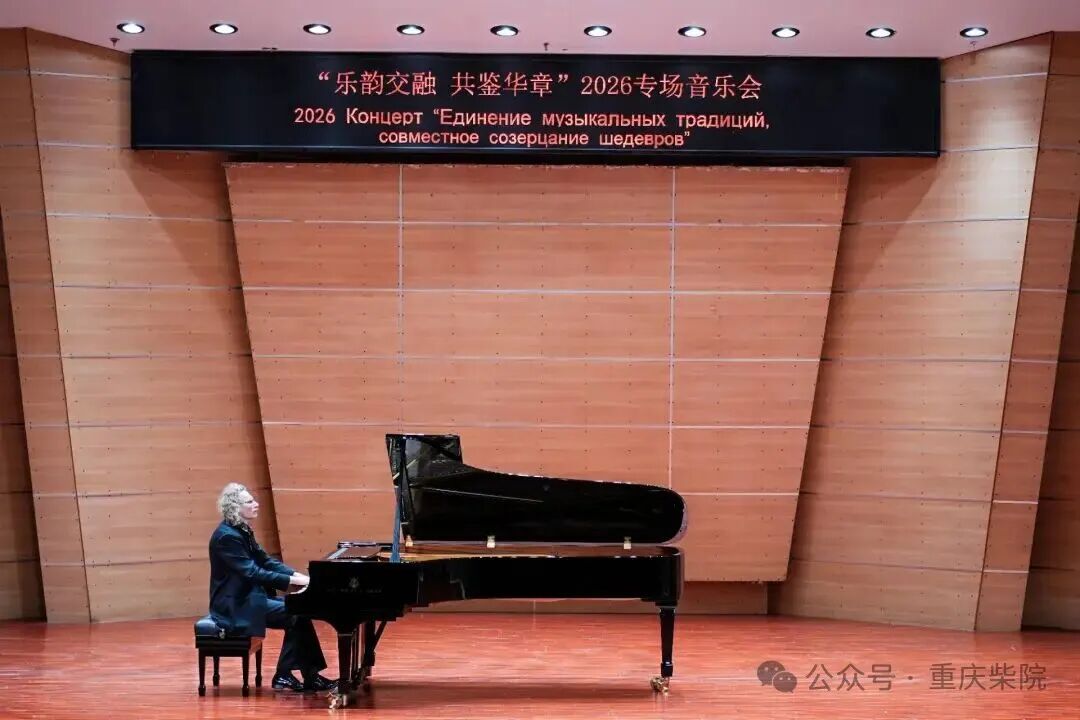
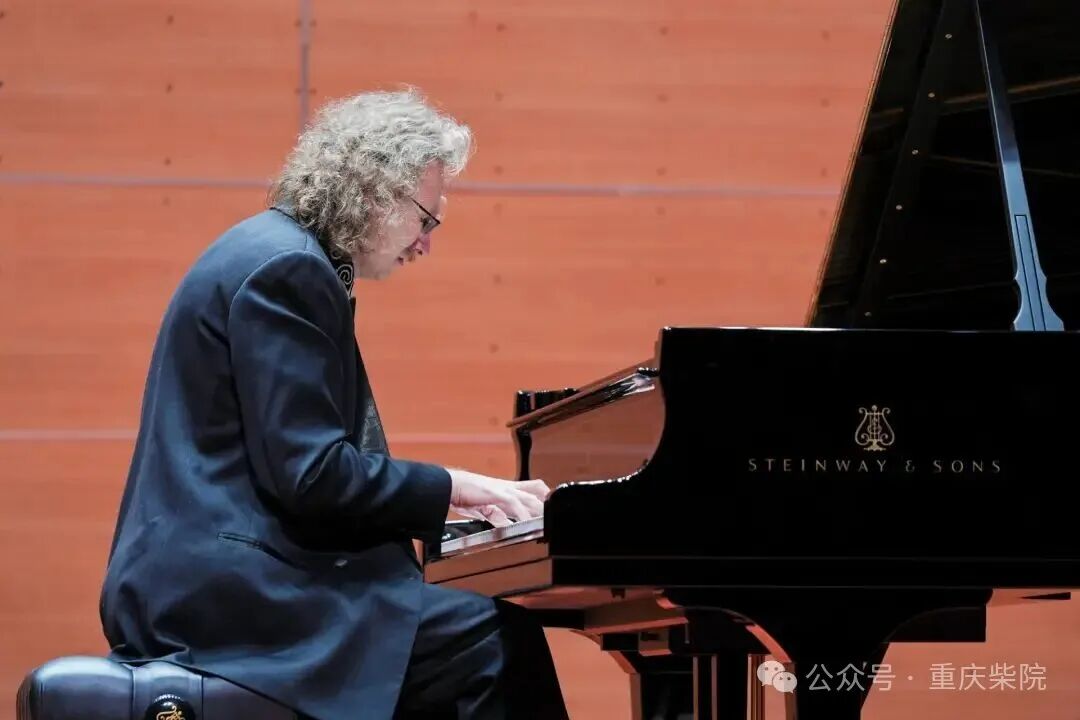
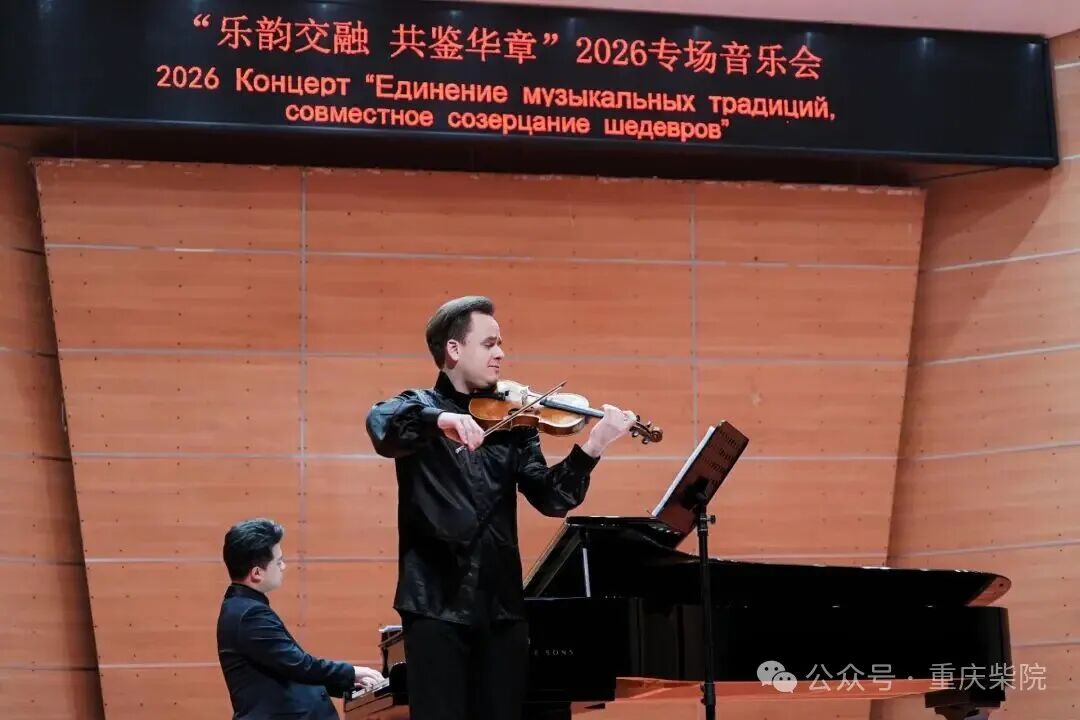
Violinist Sergey Irinyov and Jiang Sixing performed Tchaikovsky's The Seasons—twelve exquisite miniatures stringing together a poetic scroll of the turning year, from fireside reverie to the flying sleigh, revealing nature's scenery and the heart's resonance. Polyakov Alexander Evgenievich, teacher at the Belarusian State Technological University, performed Tchaikovsky's Dumka—grounded in Slavic folk narrative song, moving through dramatic shifts from deep melancholy to fervent revelry, revealing intertwined sorrow and joy. His delicate playing restored the romance and deep feeling of Russian national music, moving the audience profoundly.
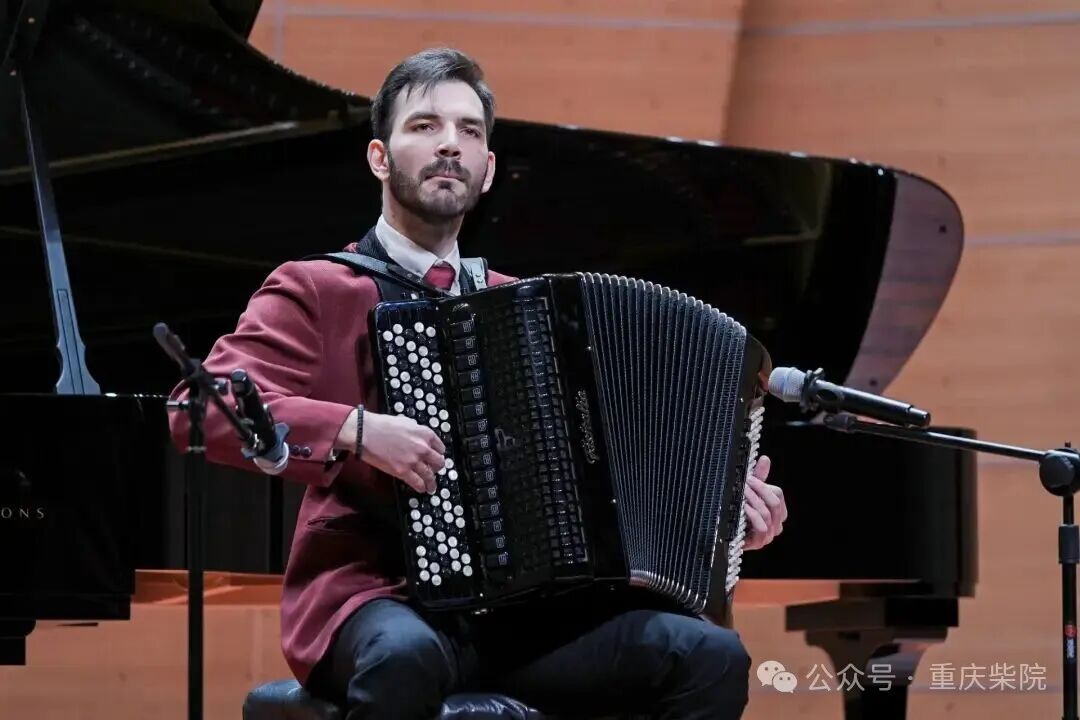
Alexa Mirkovic of the Nizhny Novgorod State Conservatory presented a Collection of Russian Songs on the bayan accordion. The exuberance of Kalinka, the resolve of Katyusha, and the tranquility of Moscow Nights converged here—the unmistakably Eastern European timbre rendered the simplicity and fervor of Russian folk music, as if carrying the audience to the vast East European plains, with applause rising again and again.
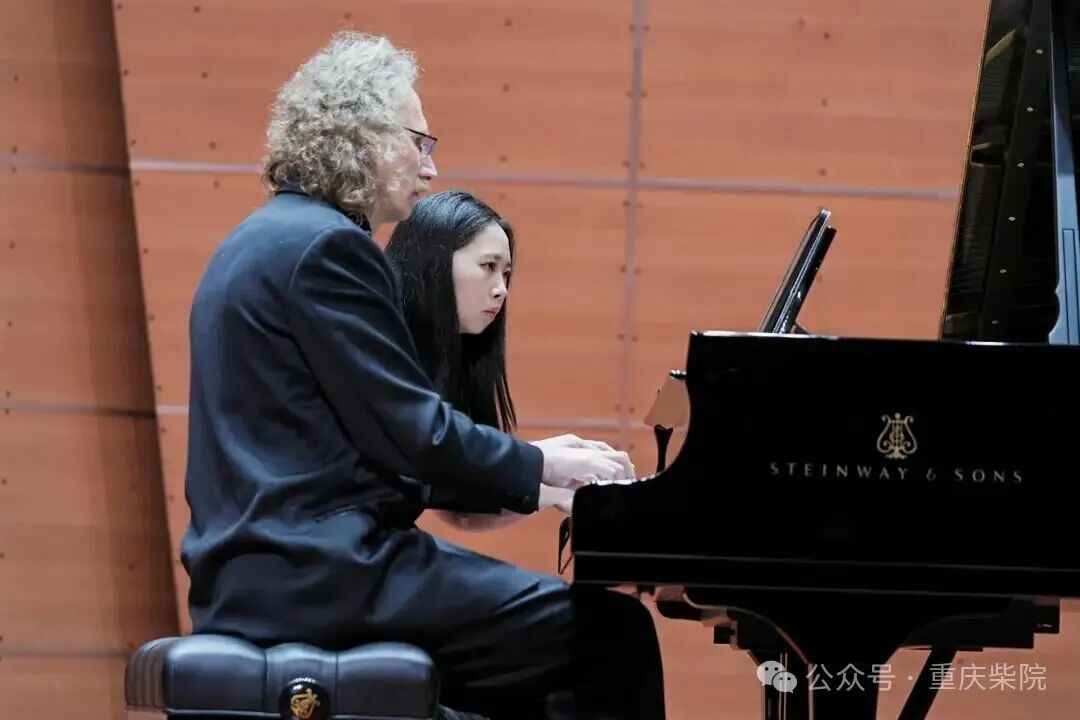
Professor Vasily Shcherbakov and student He Kaiyi performed Gemini: seated side by side, their hands dancing like mirrored partners, interweaving and reflecting each other in a universe built of black and white keys—nimble, leaping melody and brisk, surging rhythm brought the evening to a small crescendo.
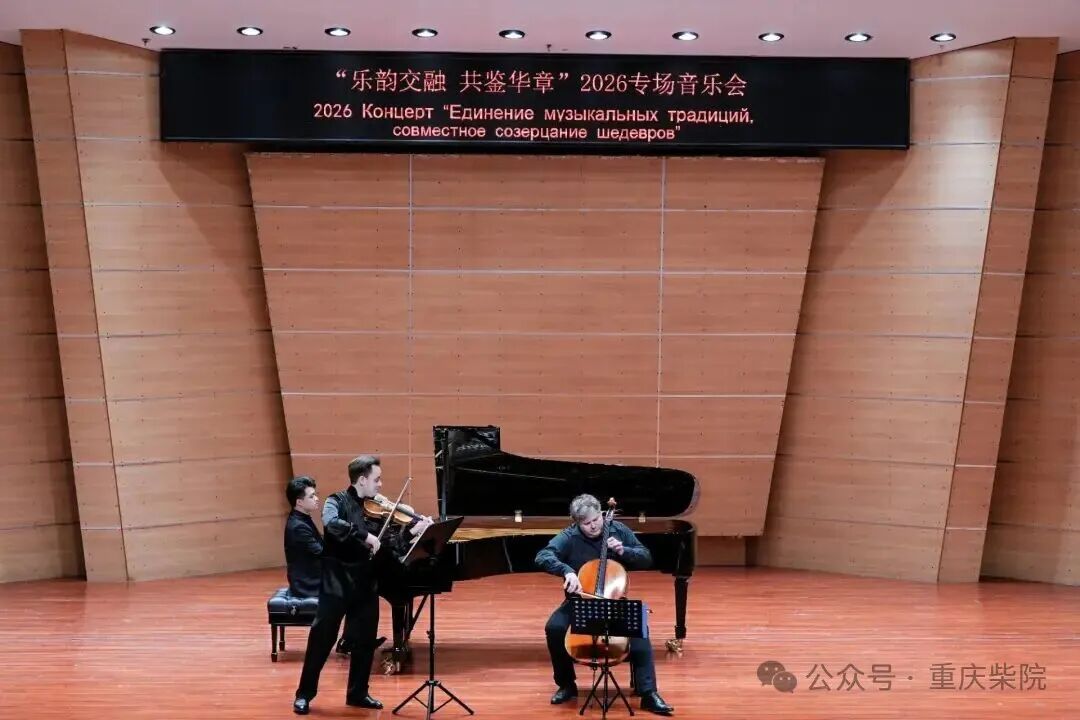
Violinist Sergey Irinyov, cellist Fedor Amosov, and Jiang Sixing joined for the Theme and Variations on the Song of the Yangtze River, arranged by Fedor Amosov. The cello's fullness, the violin's grace, and the piano's grandeur fused together—a collision of Chinese and Western instruments in a magnificent, sweeping interpretation that portrayed the mighty Yangtze and conveyed the Chinese nation's devotion to homeland and its cultural confidence, leaving the entire audience in awe.
As a companion performance to the international academic symposium, this concert provided a vivid artistic footnote to the frontier research of "AI + Music." When the daytime academic discussions met the evening's audiovisual feast, theory and practice merged in depth—letting the audience experience music's diverse expression directly through sound, and making interdisciplinary innovation audible, tangible, and experiential. Throughout the performance, applause and admiration were unceasing; after each piece, the entire hall erupted in prolonged ovations, and many in the audience took out their phones to capture these brilliant moments.
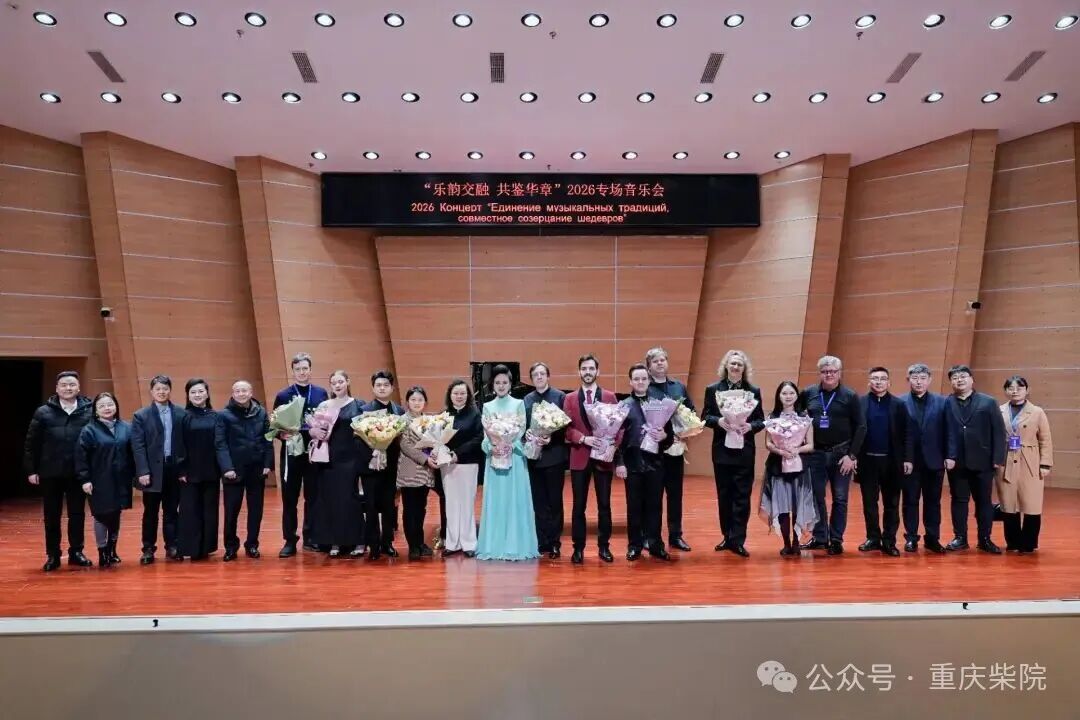
As the final note of the Theme and Variations on the Song of the Yangtze River faded, the concert drew to a successful close amid the audience's warm applause. Leaving the hall, the audience was still reluctant to part, praising this feast of Chinese and Western music. The success of this "Melodies in Fusion, Appreciating a Splendid Chapter Together" special concert not only added artistic luster to the 2nd International Symposium on "AI + Music," but also built a bridge for musical and cultural exchange between China and the world. Going forward, Chongqing Normal University will continue to cultivate the field of interdisciplinary integration, bringing more high-quality cultural and artistic feasts to faculty, students, and art lovers—letting the beauty of music keep flowing, and the flowers of interdisciplinary innovation keep blooming.
First Review: Dong Yatong
Second Review: Xu Xiaojing
Third Review: Wu Jingyu
Editor-in-Charge: Gao Jingli